
The frontier is a dependency with a policy attached
Access to a frontier model turned into a policy question in the same week the fastest work landed in decoding, where anyone can pick it up
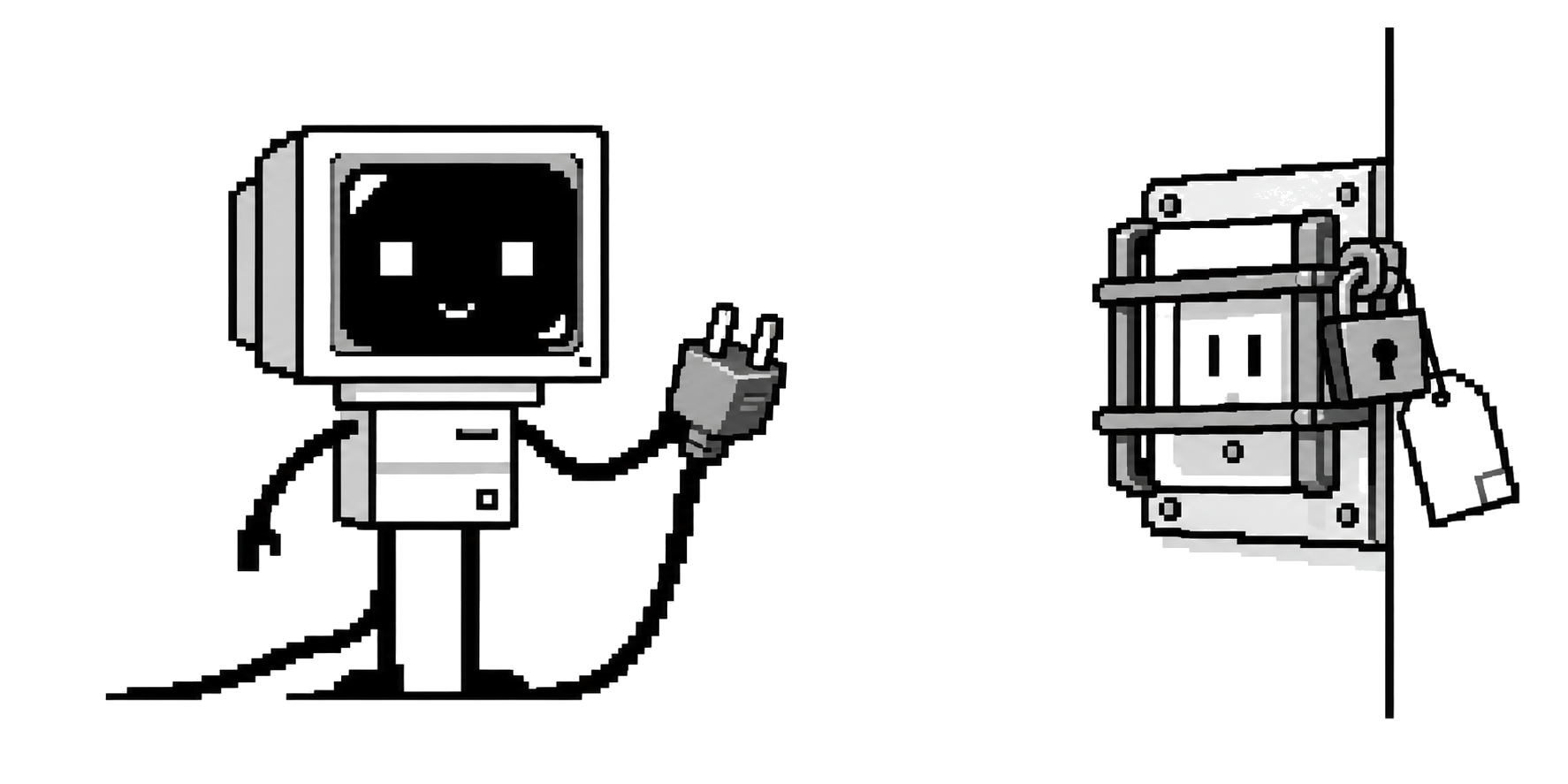
Access to a frontier model turned into a policy question this week, which is a genuinely new category of outage. A US government directive to suspend access to Fable 5 and Mythos 5, two hosted frontier models that plenty of products call every day, landed alongside a post arguing that a lab's model is allowed to stop helping you if you compete with the lab, and malware authors started padding spyware with weapons text so that automated scanners would refuse to read it. In the same days, the week's real speed gains showed up in decoding, the part of the stack anyone with a runtime can pick up. We made the case a while back that the useful models were the small ones, and the argument then was cost. This week the argument is availability, which is a much harder thing to negotiate over. Ask again when access comes back, if it does.
Top Stories
A government directive would cut off two frontier models. The instruction to suspend access to Fable 5 and Mythos 5 surfaced on Hacker News, and the reaction was less about the policy than about the dependency it exposed. Teams that standardized on one hosted model have a continuity problem that no uptime commitment covers, because the failure mode is not an outage. Procurement asks about price, latency and uptime. No vendor questionnaire has a line for what happens when calling the model stops being permitted, and that line now has a precedent behind it.
Malware authors are using safety refusals as armor. John Scott-Railton reported spyware seeded with nuclear and biological weapons text, put there for one reason. Plenty of security scanners now hand a suspicious file to a language model and ask what it does, and a model handed weapons text refuses to keep reading. So the sample goes uninspected and the refusal does the attacker's work. The rule that was supposed to stop harm ends up stopping the scanner instead, and the payload gets waved through for the same reason it looked dangerous. Scanning that a team can retune itself gets more attractive every time the hosted one declines.
The speed work this week went after decoding. Google published DiffusionGemma with a claim of 4x faster text generation, and a paper introduced DFlash, block diffusion for speculative decoding. Decoding is the token by token part where a model actually writes its answer, and it is usually where the waiting happens. Meanwhile, the technique turned up in a llama.cpp fork almost immediately, which is the part worth noting. Gains that live in the decoder travel: anyone with the runtime can implement them, on hardware already bought, without waiting for a lab to train a new checkpoint. Whoever maintains your runtime is now doing more for your latency than whoever trains the model you rent.
The terms say a model may quietly stop helping competitors. A post walked through the case that a lab's model is permitted to sabotage an app built against the lab, and the sharper point is in the title: nobody would know. Model output has no baseline, since there is no correct answer sitting next to it for comparison, so a slightly worse answer just looks like a slightly worse answer. When a substitute is good enough, a deliberate downgrade reads as a bad day rather than a policy, and nobody is obligated to tell you otherwise.
Top Links
- beellama.cpp (github.com): a llama.cpp fork with DFlash and TurboQuant already wired in.
- Xiaomi MiMo, Explore and Love (mimo.xiaomi.com): Xiaomi's MiMo post, pitched squarely at tokens per second.
- Banning noise will be a disaster for statistical data products (desfontain.es): the case for keeping deliberate noise inside published statistics.
- macOS Container Machines (news.ycombinator.com): a thread on running container machines on macOS, and what that costs you.