
AI keeps making more work for everyone else
Critical PHP flaws and the work of fixing them, mathematicians' objections to OpenAI's proof release, OpenAI on Google Cloud, Claude Duet, and specialized extraction models.
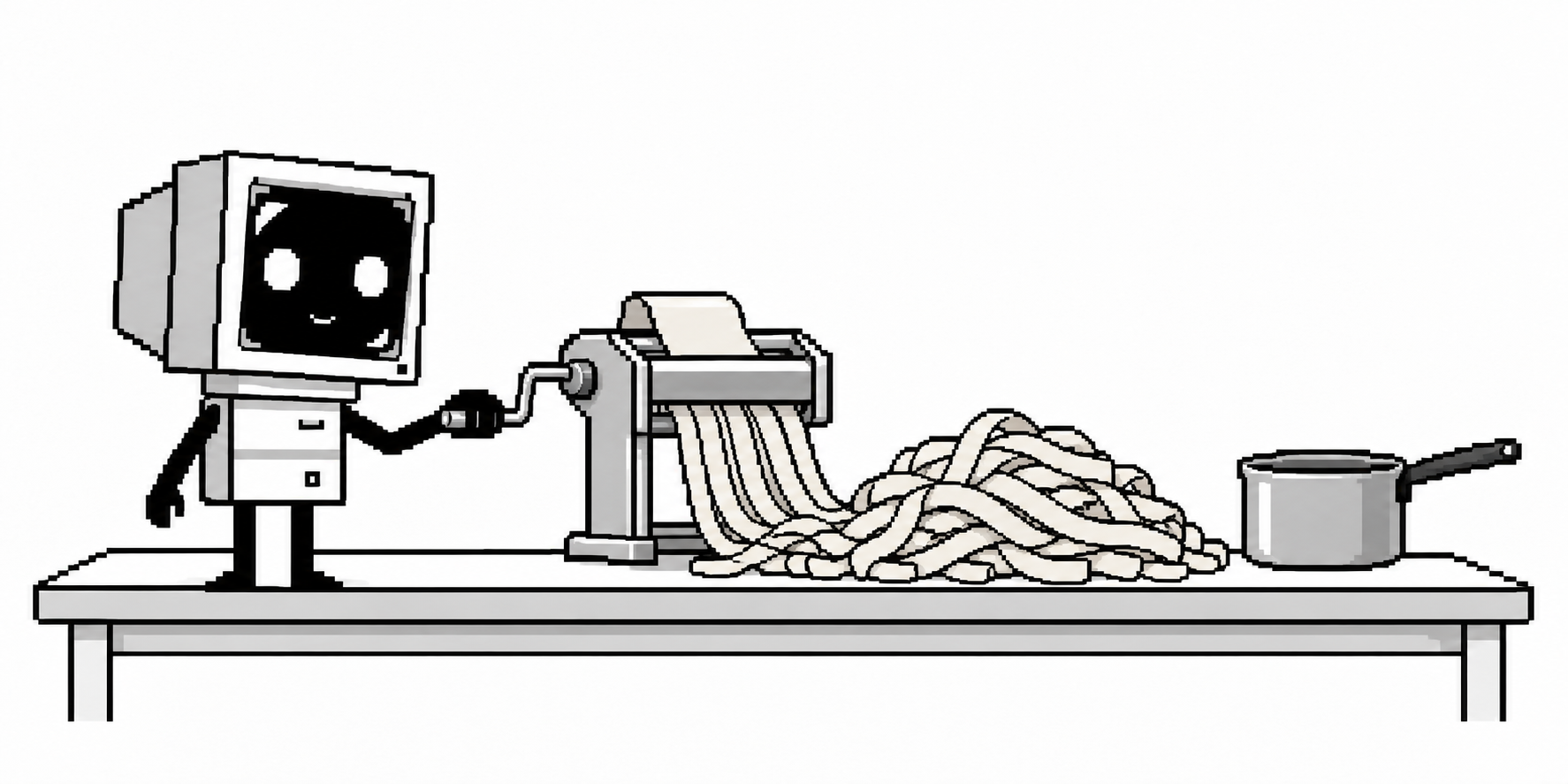
AI finding a serious PHP bug is good news for the web, and quite a lot of work for the people running it. Researchers at Calif, working through OpenAI's Patch the Planet program, and independently at Wiz used AI to investigate critical flaws in PHP. PHP powers roughly 70% of the world's websites, including sites built with WordPress, Drupal and Joomla; these flaws can let an attacker run code on an affected server without logging in.
PHP shipped fixes on Wednesday. The PHP Foundation says developers had seen signs of one underlying problem in 2024. Fixing it meant choosing among changes that could break existing software, introduce other problems or require updates across PHP's extensions. A small team with other things to do had to agree on a choice, make it work and get it out to everyone else.
AI is getting very good at creating this sort of additional work. Last week, Anthropic described replacing Git after its daily merged code changes grew from about 2,500 to more than 30,000. Having agents write all that code turned out to require a new system for keeping track of it.
OpenAI's October 6 proof release has given mathematicians a great deal of reading, too. The Association for Human Mathematics objected to the bulk publication and its disregard for human understanding. Even with a computer-checked proof, someone has to check that it proves the intended claim, as Thomas Hales explains, and work out how other mathematicians can learn from it and use it.
We'll all have to get better at handling the second-order backlog from our first-order work with AI.
Top Stories
AI vendors increasingly need to work inside one another's ecosystems. OpenAI plans to bring its models and Codex to Google Cloud, where customers could buy them through the marketplace and use existing cloud spending commitments. You can prefer OpenAI's models and still want to keep the data controls and purchasing arrangements your company already has. Selling through a rival's platform is one way to accommodate that. Microsoft remains OpenAI's primary cloud partner; general availability on Google Cloud is planned in the coming weeks.
Cloudflare is giving small extraction jobs their own model. Its Clairic preview extracts names, dates and numbers from text and images, and can compute or estimate values. For an invoice, you could ask for a total and a due date and get values your software can use. Decision models such as Jev choose among answers supplied in advance; you can't conveniently list every possible invoice total. Meanwhile, OpenAI made its Decisions API generally available, giving more of these small judgments their own inexpensive model call.
Claude Duet keeps working while users are away. Anthropic's waitlisted research preview checks connected apps, prepares daily briefs and continues assigned tasks on its own virtual machine. It asks for approval before sending messages, making payments, signing documents or deleting things. Following September's dots announcement, you can increasingly give an assistant an ongoing responsibility and come back to see how it's getting on. A venue salesperson could ask it to find the relevant photographs and assemble a presentation for a particular inquiry, using the property's actual assets.
Top Links
- Agents reading brain-cell data (openai.com): OpenAI and collaborators report turning gene-disruption data into biological research leads in 32 minutes, giving researchers more questions to test in the lab.
- Agent Skills gets a shared home (anthropic.com): Anthropic is transferring the workflow format to the Linux Foundation's Agentic AI Foundation.
- OO-Harness (arxiv.org): Researchers evolve specialized versions of an agent's prompts, tools and control flow, then route tasks to the appropriate version.
- MemoryTax (arxiv.org): A single-conversation study examines facts lost when models summarize memories; some agents also got photo captions the other methods couldn't see.
The week in AI, once a week.