
The bill is really a distance problem
The week's cost arguments were all about distance, how far an answer has to travel between the data and the model, which is where the spending shows up before the product does
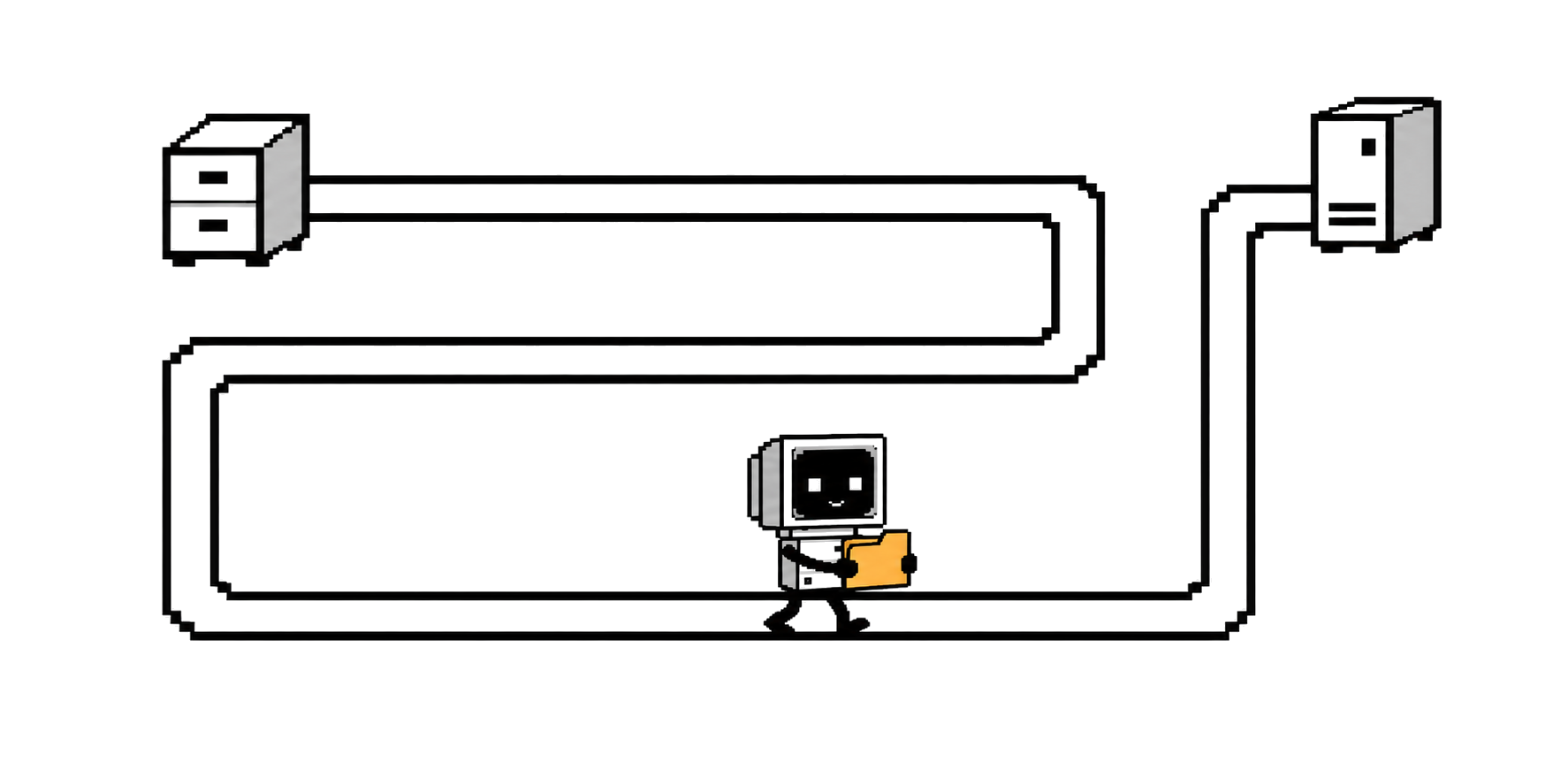
The week's cost arguments were really about distance, meaning how far an answer has to travel between the data and the model. An op-ed from a former retail executive puts hype, layoffs and stalled deployments in one column, and a talk on building in AI spends its better half on how expensive it is to move bytes around. We made the case a while back for models small enough to sit beside the data, and that case is now arriving with an invoice attached. A database vendor claims a smaller pairing beats frontier models on price, and the fastest training work this week went into removing the gap where machines wait on each other. None of that is really about capability. It comes down to what it costs to move the bytes around, which is the boring thing budgets turn on. Ask again when the next round of spending lands, and see whether anyone is still buying longer context or parking compute next to the storage instead.
Top Stories
Cursor open-sourced the megakernel it trains on. Mixture-of-Kittens fuses every mixture-of-experts communication and computation step into a single deterministic kernel, which the company reports running up to 2.37x faster than the strongest public baselines. A mixture-of-experts model routes each token to a few specialist sub-networks instead of the whole network, which is cheap until you notice the specialists live on different machines. Training then alternates: compute a bit, ship tokens across the network, compute a bit more, and the shipping is where expensive hardware sits and waits. Fusing the two closes that gap. Determinism is the quieter half: run the same job twice, land on the same weights, and a regression traces to a change, not to luck.
A retail executive says the enterprise AI rollout is a hot mess. The op-ed comes from someone who helped run a large retailer and watched the revolution arrive, and the failure mode will be familiar to anyone who has shipped an internal agent. A prototype gets built because nobody wants to be the company that fell behind, it demos beautifully, then meets the systems the company actually runs on, which were never built to be talked to. Meanwhile a longer argument that the demand for AI is being manufactured rather than measured arrives at the same place from the finance side. Sure, the spending is real. It just shows up as a bill well before it shows up as a product.
Inference keeps drifting toward wherever the data already sits. Jeff Dean's talk on the 1% rule is at its best on napkin math, and the napkins keep returning the same answer: moving data costs more than most plans assume, so the computing wants to happen where the bytes already are. But the blunter version came from a vendor. Neon reports that a smaller system paired with its database beats frontier models on price and efficiency. Sure, that is the vendor's own benchmark, and this genre of post has been reliably generous to its author, so hold the margin loosely. The direction is harder to argue with than the number.
Top Links
- Cloudflare Introduces Kitesurf (marktechpost.com): an agent-first browser that runs entirely in V8 isolates on Workers, putting the fetch where the compute already is.
- Managing AI Coding Costs at Scale (databricks.com): what a large engineering organization starts doing once coding-agent spend becomes a line item somebody owns.
- OpenAI's first hardware is taking shape as a doughnut-shaped speaker (gizmochina.com): the device rumor firms up, and the shape is a doughnut.
- Someone bought a billboard in SF to advertise a new LLM (x.com): the model is a man, hand-drawing the image generation requests, and he has had to pause new usage under the load.